

Desktop vs Mobile Slots: Which Wins 2026

Online slot gaming has moved far beyond traditional casino floors, giving players two main ways to play: desktop computers and mobile devices. Both options offer unique benefits and drawbacks that can significantly impact the gaming experience. Desktop slots typically provide larger screens and more detailed graphics, while mobile slots offer unmatched convenience and portability.
The choice between desktop and mobile slots depends on several key factors that matter to different types of players. Screen size, game availability, bonus access, and payment options can vary between platforms. Some players prefer the immersive experience of desktop gaming, while others value the ability to play anywhere with their smartphone.
Understanding the differences between these platforms helps players make the right choice for their gaming style. This comparison will explore everything from security features to software availability, giving players the information they need to decide where they want to spin the reels.
What Are Desktop Slots
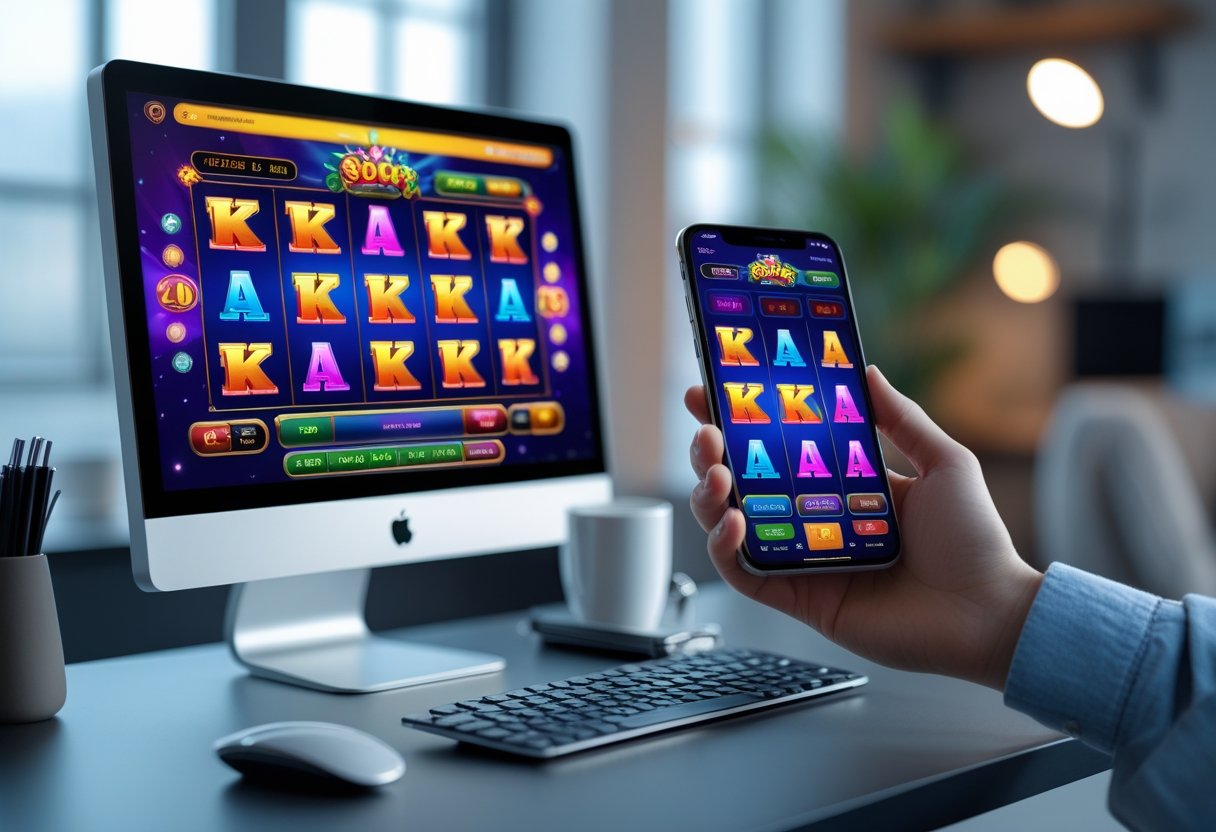
Desktop slots offer players a full-screen gaming experience with enhanced graphics and stable performance. These games run on computers and laptops through web browsers or downloaded casino software.
Features of Desktop Slot Games
Desktop slot games provide superior visual quality with high-resolution graphics and detailed animations. The larger screen size allows developers to include more complex game elements and bonus features.
Most desktop slots support multiple betting options and advanced settings. Players can adjust graphics quality, sound levels, and game speed to match their preferences.
Game libraries are typically larger on desktop platforms. Many online casinos offer their complete slot collection to desktop users, while mobile versions may have fewer titles available.
Desktop slots often include enhanced bonus rounds with interactive elements. These features take advantage of keyboard and mouse controls for more engaging gameplay.
Auto-play functions are more advanced on desktop versions. Players can set detailed parameters for automatic spins, including win and loss limits.
Typical User Experience on Desktop
Desktop users enjoy stable internet connections that reduce game interruptions. Wired connections provide consistent performance without the connectivity issues common on mobile devices.
Navigation is more precise using a mouse and keyboard. Players can easily access game menus, adjust settings, and manage their accounts without touch screen limitations.
Screen real estate allows for better game visibility. Players can see all game information, including paytables and bonus details, without scrolling or switching screens.
Multi-tasking capabilities let players open multiple browser tabs. They can check other casino games, read reviews, or manage banking while playing slots.
Session lengths tend to be longer on desktop platforms. The comfortable setup encourages extended gaming sessions compared to mobile play.
What Are Mobile Slots
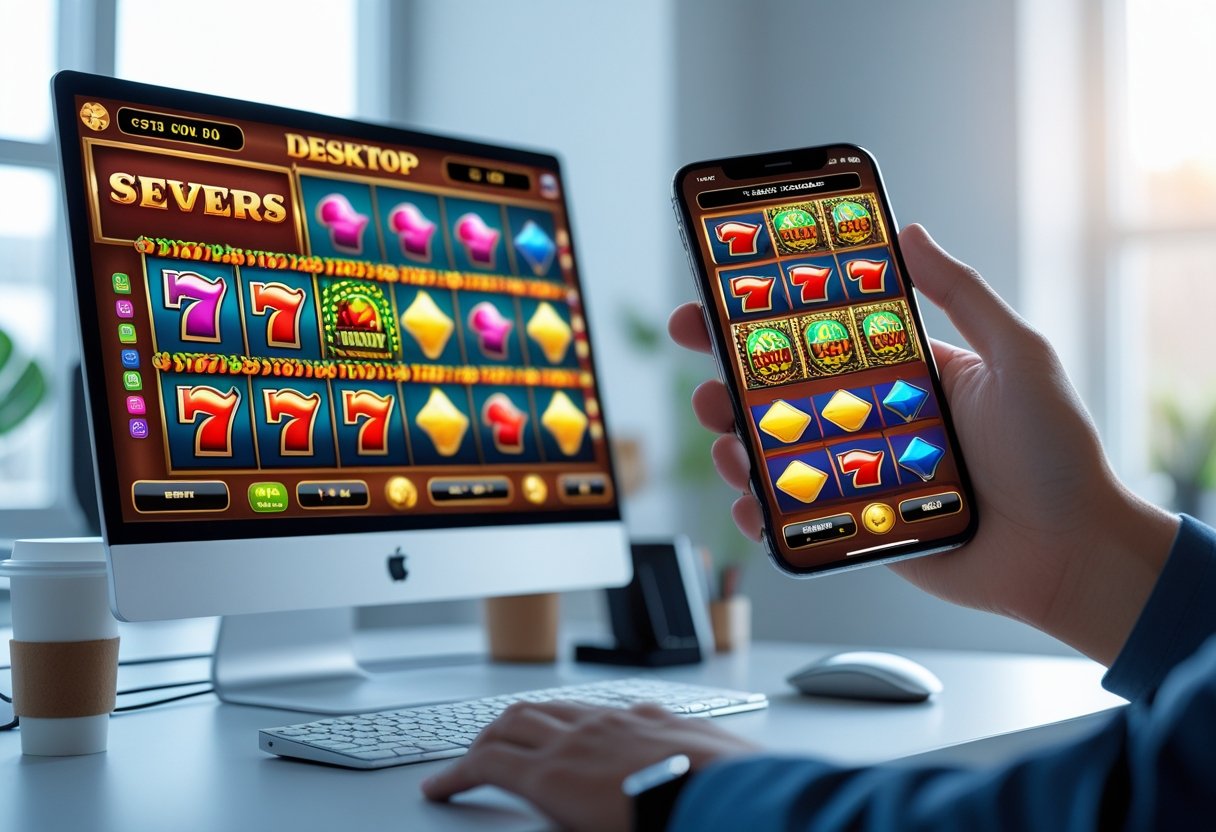
Mobile slots are casino games designed to work on smartphones and tablets. These games offer touch controls and special features that work well on smaller screens.
Mobile Slot Game Features
Mobile slots include touch-based controls that let players tap to spin reels and access bonus rounds. The buttons are bigger and easier to press on small screens.
Most mobile slots have simplified interfaces compared to desktop versions. Game developers remove extra buttons and menus to make the screen less crowded.
Auto-play functions are common in mobile slots. Players can set the game to spin automatically while they do other things on their phone.
Many mobile slots offer exclusive bonuses that desktop players cannot get. These bonuses encourage people to play on their phones instead of computers.
Portrait mode optimization lets players hold their phone normally while playing. The reels and controls fit the tall, narrow screen shape.
Quick loading times help mobile slots start faster than desktop games. This works better for people who want to play for short periods.
User Experience on Smartphones and Tablets
Tablet screens provide more space than phones for detailed graphics and animations. Players can see bonus features and game details more clearly.
Smartphone play focuses on casual, short gaming sessions. Most mobile players spend 5-15 minutes per session instead of longer desktop sessions.
Touch gestures replace mouse clicks for all game actions. Players swipe to change bet amounts and tap to activate special features.
Battery usage affects how long players can enjoy mobile slots. Games with simpler graphics use less power and last longer.
Data usage matters for players without unlimited internet plans. Mobile slots use less data than desktop versions because of smaller file sizes.
Key Differences Between Desktop and Mobile Slots
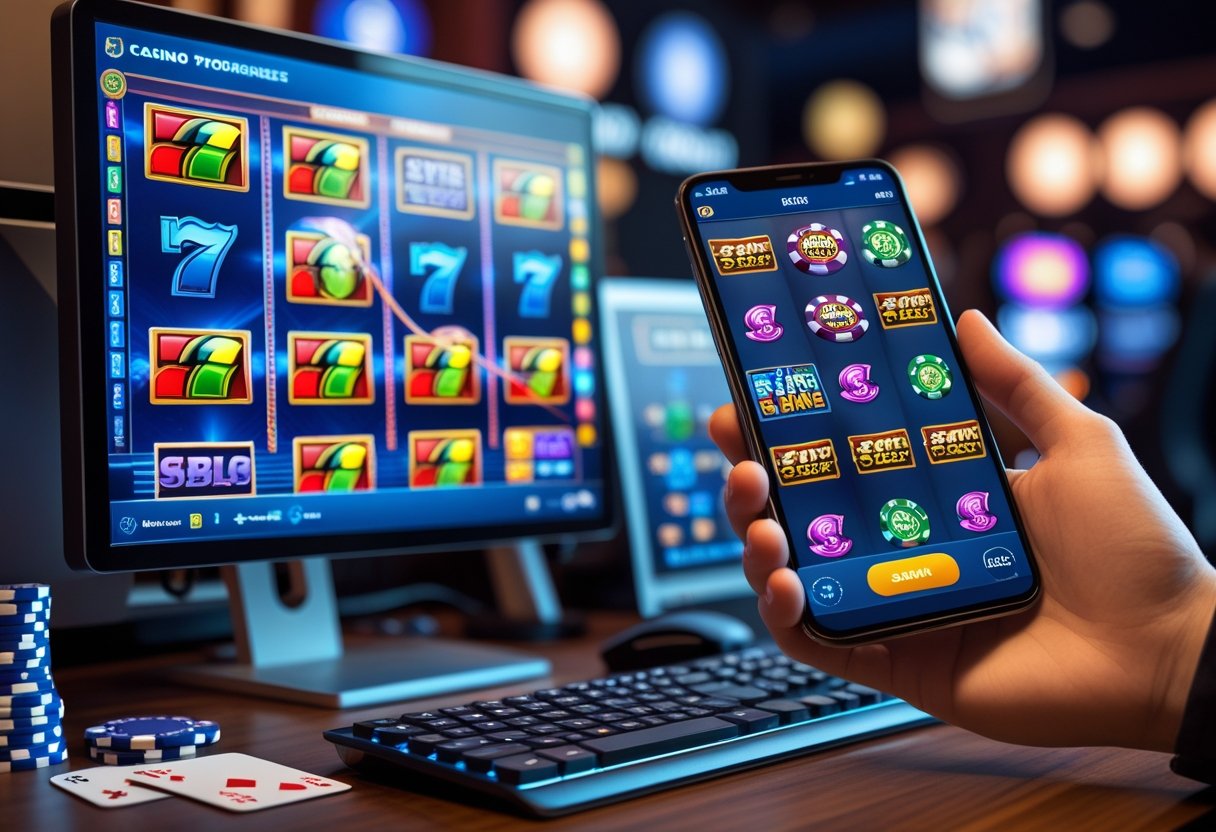
Desktop and mobile slots offer distinct experiences due to screen size limitations and design choices. The interface layout and visual quality vary significantly between platforms.
Game Interface and Design
Desktop slots feature larger screens that display all game elements simultaneously. Players can see the full paytable, spin button, and betting controls without scrolling or switching screens.
The bigger display allows developers to include more detailed menus. Bonus rounds show expanded animations and feature multiple interactive elements on screen at once.
Mobile slots require simplified layouts due to smaller screens. Developers reduce the number of visible elements and create touch-friendly buttons that work well with finger taps.
Many mobile games hide secondary features behind menu buttons. Players must tap icons to access paytables or game settings that remain visible on desktop versions.
Portrait orientation on phones forces different button placement compared to desktop’s landscape layout. Spin buttons typically appear at the bottom center on mobile devices.
Some complex bonus games get redesigned for mobile play. Multi-stage features may become single-screen experiences to fit smaller displays.
Graphics and Performance
Desktop slots display high-resolution graphics with detailed symbols and background animations. The larger screen space allows for intricate visual effects during wins and bonus rounds.
Mobile versions often use compressed graphics to reduce loading times and data usage. Symbols may appear less detailed, and some background animations get removed entirely.
Loading speeds differ between platforms based on internet connection type. Desktop players using wired connections typically experience faster game loading than mobile users on cellular networks.
Battery life affects mobile gaming sessions. Graphics-heavy slots drain phone batteries quickly, while desktop play has no power limitations.
Mobile devices may experience frame rate drops during intensive bonus rounds. Desktop computers generally maintain smooth performance throughout all game features.
Accessibility and Convenience
Mobile slots offer instant access from any location with an internet connection, while desktop slots require players to be at a computer. Each platform serves different gaming preferences and lifestyle needs.
Playing On the Go
Mobile slots let players spin reels anywhere they have a smartphone or tablet. This means gaming during lunch breaks, while waiting for appointments, or during commutes.
The touch interface makes playing simple. Players tap to spin and swipe to navigate menus. Most mobile slot apps work offline after the initial download, though real money games need internet access.
Mobile advantages:
- Play from bed, couch, or any comfortable spot
- No need to sit at a desk
- Quick sessions fit into busy schedules
- Instant access without booting up computers
Desktop slots require players to be at their computer. This limits when and where people can play. However, some players prefer the focused gaming environment that a dedicated computer setup provides.
Device Compatibility
Modern smartphones and tablets run most slot games smoothly. iOS devices from iPhone 8 and newer handle graphics-heavy slots well. Android devices with 3GB RAM or more provide good performance.
Desktop computers offer more processing power for complex slot animations. Older computers from 2018 or newer typically run web-based slots without issues. Browser compatibility varies, with Chrome and Firefox offering the best experience.
Mobile slots automatically adjust screen size and button placement. Portrait mode works best for most games, though some slots support landscape orientation.
Desktop versions display more game information on screen at once. Players see larger slot reels, clearer graphics, and more detailed pay tables without scrolling.
Bonuses and Promotions
Casino operators design different bonus structures for desktop and mobile players. Mobile users often receive exclusive offers to encourage on-the-go gaming, while desktop players may access traditional promotions with higher values.
Desktop-Specific Offers
Desktop casino bonuses typically focus on larger deposit matches and extended gameplay rewards. Most casinos offer welcome bonuses ranging from 100% to 300% match rates for first-time deposits made through desktop platforms.
These platforms often feature loyalty programs with tier-based rewards. Players earn points faster during desktop sessions due to longer play times. Higher tiers unlock benefits like cashback, personal account managers, and exclusive tournament access.
Desktop users frequently receive weekly reload bonuses worth 25% to 50% of their deposit amounts. The wagering requirements usually range from 35x to 45x the bonus amount.
Many operators provide VIP promotions exclusively through desktop interfaces. These include high-stakes tournaments, luxury prize draws, and invitation-only events with significant cash rewards.
Mobile-Exclusive Bonuses
Mobile casino apps offer smaller but more frequent bonuses designed for quick gaming sessions. Daily free spin packages typically include 10-20 spins on popular slot games, delivered through push notifications.
Lower wagering requirements are common for mobile bonuses. Most mobile-exclusive offers feature 20x to 30x playthrough requirements, making them easier to clear than desktop equivalents.
App-based casinos provide instant bonuses for specific actions. Players receive immediate rewards for enabling notifications, downloading apps, or completing mobile verification steps.
Location-based promotions use GPS technology to offer bonuses when players visit specific areas. Some apps provide extra spins or deposit matches when users play from particular geographic locations or events.
Security and Safety Considerations
Both desktop and mobile slot platforms use strong security measures to protect players. Desktop systems offer more control over security settings, while mobile apps provide built-in protection features.
Data Protection on Desktop
Desktop slot platforms typically use SSL encryption to protect player information during data transmission. This technology scrambles personal details and financial data as it moves between the player’s computer and the casino server.
Players have more control over their security settings on desktop computers. They can install antivirus software, use VPNs, and manage firewall settings directly.
Two-factor authentication is commonly available on desktop platforms. This adds an extra layer of protection by requiring a second verification step beyond just a password.
Desktop browsers store security certificates that help verify legitimate casino websites. Players can easily check these certificates to confirm they’re on a real casino site.
The larger screen size makes it easier to spot suspicious activity or fake websites. Players can more easily read URLs and security warnings.
Mobile Security Features
Mobile casino apps use device-specific security measures like fingerprint scanning and face recognition. These features make it harder for unauthorized users to access accounts.
Apps store data differently than websites. They create secure containers on the device that separate casino information from other apps and data.
Mobile devices automatically update security patches more frequently than desktop computers. This keeps protection current against new threats.
Secure payment gateways work seamlessly with mobile wallets and banking apps. This reduces the need to enter sensitive financial information repeatedly.
Mobile apps often include automatic logout features that activate when the device is idle. This prevents unauthorized access if someone leaves their phone unattended.
Many mobile casino apps offer location-based security that only allows access from approved geographic areas.
Software Providers and Game Availability
Major software providers now build games using HTML5 technology that works on both desktop and mobile platforms. However, some developers focus more on creating games for specific platforms, which affects the total number of games available to players.
Popular Providers for Desktop Slots
Microgaming leads desktop slot development with over 800 titles in their portfolio. Their desktop games feature complex bonus rounds and detailed graphics that work best on larger screens.
NetEnt offers around 200 desktop slots with high-quality animations. Their games like Starburst and Gonzo’s Quest were built for desktop first, then adapted for mobile devices.
Playtech provides more than 500 desktop slot titles. They focus on branded games based on movies and TV shows that use the full screen space available on desktop computers.
IGT specializes in land-based casino games adapted for desktop online play. Their slots include popular titles like Cleopatra and Da Vinci Diamonds that players recognize from physical casinos.
These providers typically release new games on desktop platforms first. Desktop versions often include more detailed menus and advanced settings options.
Developers Leading Mobile Slot Innovation
Play’n GO creates mobile-first slot games with simple interfaces and touch-friendly controls. They release about 50 new mobile slots each year with swipe and tap features built in from the start.
Pragmatic Play builds all new slots using mobile-responsive design. Their games automatically adjust to different screen sizes and include mobile-specific features like portrait mode play.
Push Gaming focuses entirely on mobile slot development. Their games feature innovative mechanics designed for touchscreen devices, including gesture-based bonus rounds.
Yggdrasil Gaming uses advanced HTML5 technology to create slots that load faster on mobile devices. Their games include mobile-optimized graphics that use less battery power while maintaining visual quality.
Mobile-focused providers often release games simultaneously across all devices. They prioritize simple gameplay that works well on smaller screens.
Payment Methods and Banking
Desktop platforms typically offer more payment options than mobile slots, while mobile apps focus on fast, convenient transactions through digital wallets and tap-to-pay services.
Desktop Transaction Options
Desktop slot platforms support the widest range of banking methods. Players can use credit cards, debit cards, bank transfers, e-wallets, prepaid cards, and cryptocurrency options.
Traditional Banking Methods:
- Direct bank transfers
- Wire transfers
- Credit and debit card payments
- Check deposits (some sites)
Digital Payment Options:
- PayPal and other e-wallets
- Cryptocurrency deposits
- Prepaid card systems
- Regional payment services
Desktop sites often process larger transactions more easily. They handle higher deposit and withdrawal limits than mobile apps. The interface allows players to view detailed transaction histories and manage multiple payment methods at once.
Some desktop platforms connect to older banking systems. This can make deposits and withdrawals take longer to process compared to newer mobile payment technologies.
Mobile Payment Solutions
Mobile slot apps focus on quick, simple payment methods. They use mobile-optimized services that work well on phones and tablets.
Popular Mobile Options:
- Apple Pay and Google Pay
- Mobile e-wallets (PayPal, Venmo)
- Cryptocurrency apps
- Carrier billing (charge to phone bill)
Mobile payments happen faster than desktop transactions. Tap-to-pay features let players deposit money in seconds. Biometric security like fingerprint scanning makes payments more secure.
Mobile Payment Benefits:
- Instant deposits
- Touch ID/Face ID security
- Location-based fraud protection
- One-touch withdrawals
Mobile apps may limit payment choices to keep things simple. They typically offer fewer banking options than desktop sites but focus on the most popular and reliable methods.
Player Preferences and Trends
Mobile gaming now makes up over 70% of online casino play, while desktop users favor more complex gameplay features. Different age groups and gaming styles drive these platform choices.
Demographics of Desktop Slot Players
Desktop slot players tend to be older and more experienced gamblers. Many are between 35-55 years old and prefer longer gaming sessions.
These players often have more disposable income. They like complex slot features and detailed graphics that work better on larger screens.
Key Desktop Player Traits:
- Prefer games with interactive storylines
- Enjoy 3D animations and cinematic intros
- Want access to detailed game statistics
- Like managing multiple betting strategies
- Value customer support chat features
Desktop users often play for 2-3 hours at a time. They choose slots with bonus rounds and free spin features that require more attention.
Many desktop players use multiple monitors or tabs. This lets them track their account balance and compare different games easily.
Trends in Mobile Slot Gaming
Mobile slot gaming grows by about 15% each year. Players under 35 make up most of this growth.
Popular Mobile Gaming Patterns:
- Quick sessions lasting 10-20 minutes
- Playing during commutes or breaks
- Simple tap-and-spin gameplay
- Social sharing features
- Push notifications for bonuses
Mobile players prefer simpler slot designs. They want games that load fast and work well on small screens.
Touch controls have changed how people play slots. Swiping and tapping feel more natural than clicking buttons.
Most mobile players switch between different casino apps. They look for welcome bonuses and free spin offers across multiple platforms.
Battery life affects mobile gaming habits. Players choose games that don’t drain their phone quickly during longer sessions.
Tips for Choosing Between Desktop and Mobile Slots
The choice between desktop and mobile slots depends on your specific gaming habits and what features matter most to you. Your decision should be based on when and where you play, plus which platform offers the best experience for your preferred games.
Assessing Your Gaming Needs
Players should first consider when they want to play slots. Mobile slots work best for short gaming sessions during breaks or while traveling.
Desktop slots suit longer gaming sessions at home. The larger screen makes it easier to see game details and play for extended periods.
Think about your typical gaming schedule. Do you play for 10-15 minutes at a time? Mobile is the better choice. Do you prefer hour-long sessions? Desktop provides more comfort.
Game selection matters too. Some newer slots are designed mainly for mobile devices. Others have complex features that work better on desktop screens.
Consider your internet connection. Mobile slots use cellular data, which can be slower or cost money. Desktop slots typically use faster home internet connections.
Factors to Consider Before Deciding
Screen size affects your gaming experience. Desktop monitors show more game details and make bonus features easier to understand.
Mobile screens are smaller but more convenient. You can play anywhere without being tied to one location.
Graphics quality differs between platforms. Desktop slots often have better visual effects and smoother animations. Mobile slots may have reduced graphics to save battery and data.
Bonus access varies by platform. Some casinos offer mobile-only bonuses. Others provide better promotions for desktop players.
Payment options can be different too. Mobile apps might have fewer banking methods than desktop sites.
Battery life is a mobile-only concern. Long gaming sessions drain phone batteries quickly.
Many players use both platforms. They play mobile slots for quick games and switch to desktop for serious gaming sessions.
Frequently Asked Questions
Players often wonder about key differences in screen layouts, game selection, and bonus availability between platforms. Both mobile and desktop slots offer similar winning odds, though each platform has unique advantages for graphics quality and convenience.
What are the primary differences between desktop and mobile slot gaming experiences?
Desktop slots use larger screens to display multiple game elements at once. Players can see more details and interface options on their computer monitors.
Mobile slots focus on touch-friendly controls. Games use swipe and tap functions instead of mouse clicks.
Screen layout differs significantly between platforms. Desktop versions show more information simultaneously while mobile games prioritize essential elements.
Loading speeds vary based on internet connection and device power. Desktop computers typically have stronger processors than mobile devices.
How do the odds of winning compare between desktop and mobile slots?
The odds remain identical between desktop and mobile versions of the same slot game. Game developers use the same random number generators for both platforms.
Return to player percentages stay consistent across devices. A slot with 96% RTP on desktop maintains 96% RTP on mobile.
Payout frequencies and jackpot amounts match exactly. The underlying game mechanics do not change based on the device used.
Can you find the same variety of slot games on mobile devices as on desktop computers?
Most major online casinos offer identical game libraries across platforms. Players can access the same titles on mobile and desktop.
Some smaller casinos may have fewer mobile games than desktop options. This happens less frequently with established gaming sites.
Newer slot releases typically launch simultaneously on both platforms. Game developers now create titles for mobile-first experiences.
Is the quality of graphics and gameplay in mobile slots comparable to desktop versions?
Modern smartphones have powerful processors and high-resolution screens. These devices can display detailed graphics and smooth animations.
Mobile versions may use slightly compressed graphics to reduce loading times. The difference is usually minimal on quality devices.
Touch controls can feel more interactive than mouse clicks. Many players prefer the direct contact with game elements.
Desktop versions may show more visual details due to larger screen space. Complex bonus rounds often display better on bigger monitors.
What are the advantages of playing slot games on mobile devices over desktop?
Mobile slots offer complete portability and convenience. Players can spin reels anywhere with internet access.
Touch controls provide direct interaction with games. Swiping and tapping feels more engaging than clicking buttons.
Mobile devices allow for quick gaming sessions during breaks. Players don’t need to sit at a computer desk.
Smartphone notifications can alert players to new bonuses or promotions. Desktop users must actively check their accounts.
Do online casinos offer exclusive bonuses for mobile slot players?
Many casinos provide mobile-specific promotions and bonuses. These offers encourage players to use casino apps or mobile browsers.
Mobile bonuses often include free spins on featured slot games. Some casinos offer deposit matches exclusively for mobile users.
App-only promotions reward players who download casino applications. These bonuses may not be available to desktop users.
Push notifications deliver instant bonus alerts to mobile players. Desktop users might miss time-sensitive offers without constant checking.