

Common Mistakes to Avoid in Sports Betting Online

Sports betting online rewards clear thinking more than it rewards clever picks, and most of the money a casual Serbian player gives back to the book comes from the same handful of behavioural slips. This post walks through those slips as warnings rather than lectures, with specific triggers and specific brakes to put in place.
Warning. Chasing losses is the single most expensive habit. It feels like problem-solving and reads on the account history as the opposite.
Warning. Doubling stakes on a tilt rarely recovers the previous ticket. It mostly accelerates the week’s loss curve into a single afternoon.
Warning. Opening a second account to work around a hit limit removes the one brake that was actually working. The regulator treats this as self-exclusion bypass.
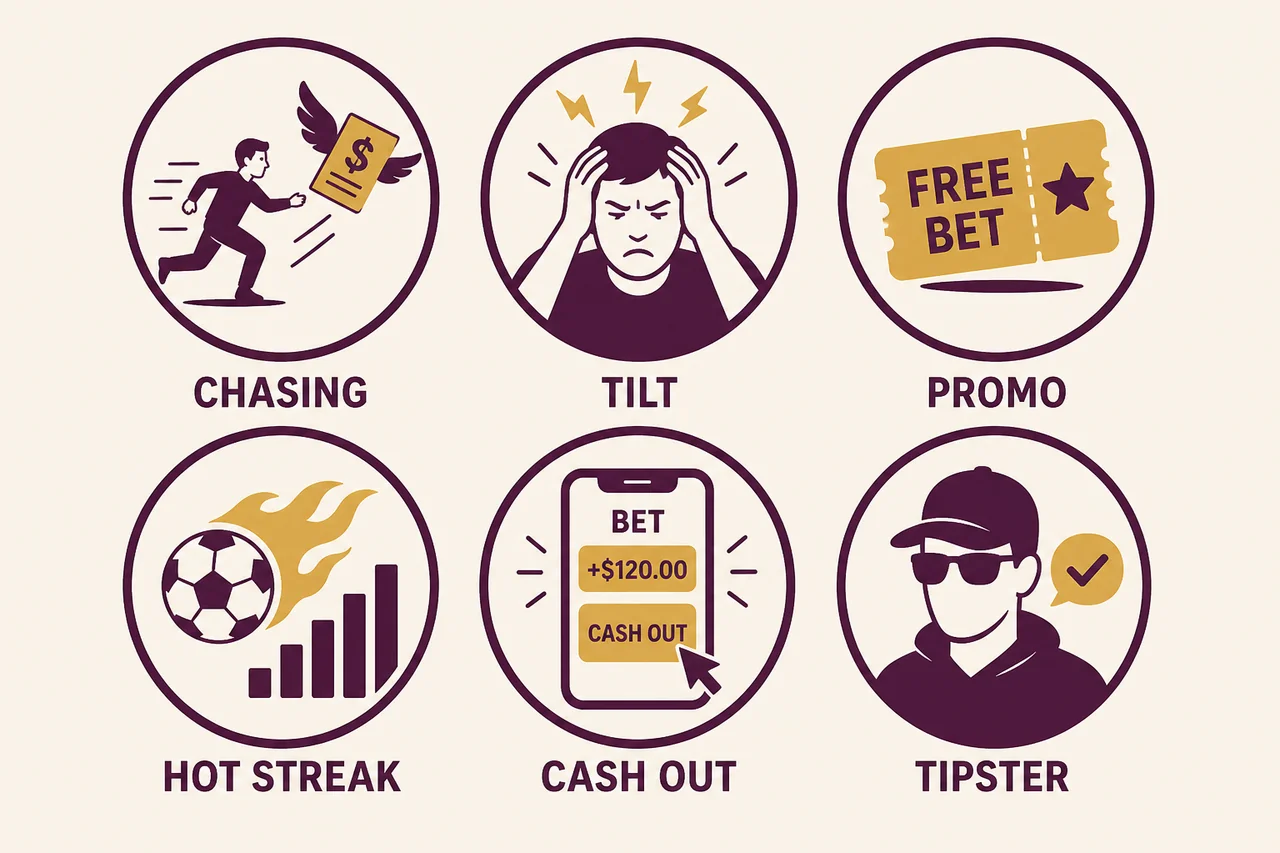
Chasing a Loss on the Same Day
A losing bet on Saturday morning does not become a winning bet by placing another one that afternoon with a bigger stake. The emotional logic that says “I need to win it back” is a known pattern in behavioural research and surfaces in GambleAware’s work on anchoring and commitment devices. Operators now display reality checks in part because this pattern is so well mapped.
The brake is not willpower. The brake is a pre-set per-day loss limit that locks the account for the rest of the session once reached. Install the limit on a Monday morning, when you cannot imagine ever needing it, and the operator will apply it on the Saturday when you very much do.
Taking a Promotion Without Reading the Terms
Promotions are entertainment credit, not expected value. The headline percentage on a welcome bonus rarely survives the wagering requirement, the minimum odds condition and the deadline attached to it. Accepting the credit without reading the three fine-print lines is the quiet mistake that sets up a frustrating fortnight.
| Promotion term | Where it quietly bites | Honest workaround |
|---|---|---|
| Wagering requirement | Rolls the stake a dozen times at a minimum odd | Multiply the stake by the roll number before deciding |
| Minimum odds | Pushes the bettor to shorter-margin markets | Decline the credit if your style sits outside the band |
| Deadline | Forces a weekly cadence of qualifying bets | Treat the deadline as expiry, not as a race |
| Game eligibility | Only certain markets count | Check the list before placing any qualifying bet |
Mistaking a Hot Streak for a System
Three winning tickets in a row does not reveal a system. It reveals the arithmetic of a small sample, which is why the operator can price such a casual outcome without a tremor. Players who talk themselves into a doubled stake on the fourth bet after three greens are the audience the overround was built for.
The honest routine is to keep the stake flat for a defined period and let the sample grow before taking any conclusion from it. A hundred tickets at the same stake tell a story. Four do not.
Betting Outside What You Actually Watch
A player who follows the Spanish second division knows which coach rotates heavily on a Thursday after a Europa match. A player who taps a Spanish second division bet after reading three paragraphs on a tipster blog knows only what the tipster chose to show them. The difference between those two players is money, over a season.
- Pick one or two sports that you already watch
- Add one league inside each sport you can follow on a casual week
- Skip tickets on anything else, no matter how tempting the price
- Expand the watchlist slowly, one league at a time, over a season
Avoid the Third Division of a Country You Have Never Visited
Lower divisions carry wider margins because the pricing is thinner. A ticket on a league you cannot name three teams in is a ticket into that wider margin without the information the price assumed you had.
Chasing an In-Play Market Without Watching the Match
Research summarised in The Conversation found that in-play bettors who reported more frustration also used instant deposit features more often and rated them most important. The pattern is familiar: a goal flips a slip, the live price moves, the thumb reaches for a quick stake, and the second ticket is placed before the brain has caught up with the first.
Watching the match helps. So does a per-match live-stake cap set before kickoff. Both together are more effective than either one alone, and both can be adjusted by the player, not the operator.
Ignoring the Cash-Out Price Trap
Cash out is a priced product. The operator’s margin sits inside the quote, and repeated cash outs across a slate quietly move margin from the player to the book. The common mistake is treating cash out as a neutral exit when it is in fact another bet.
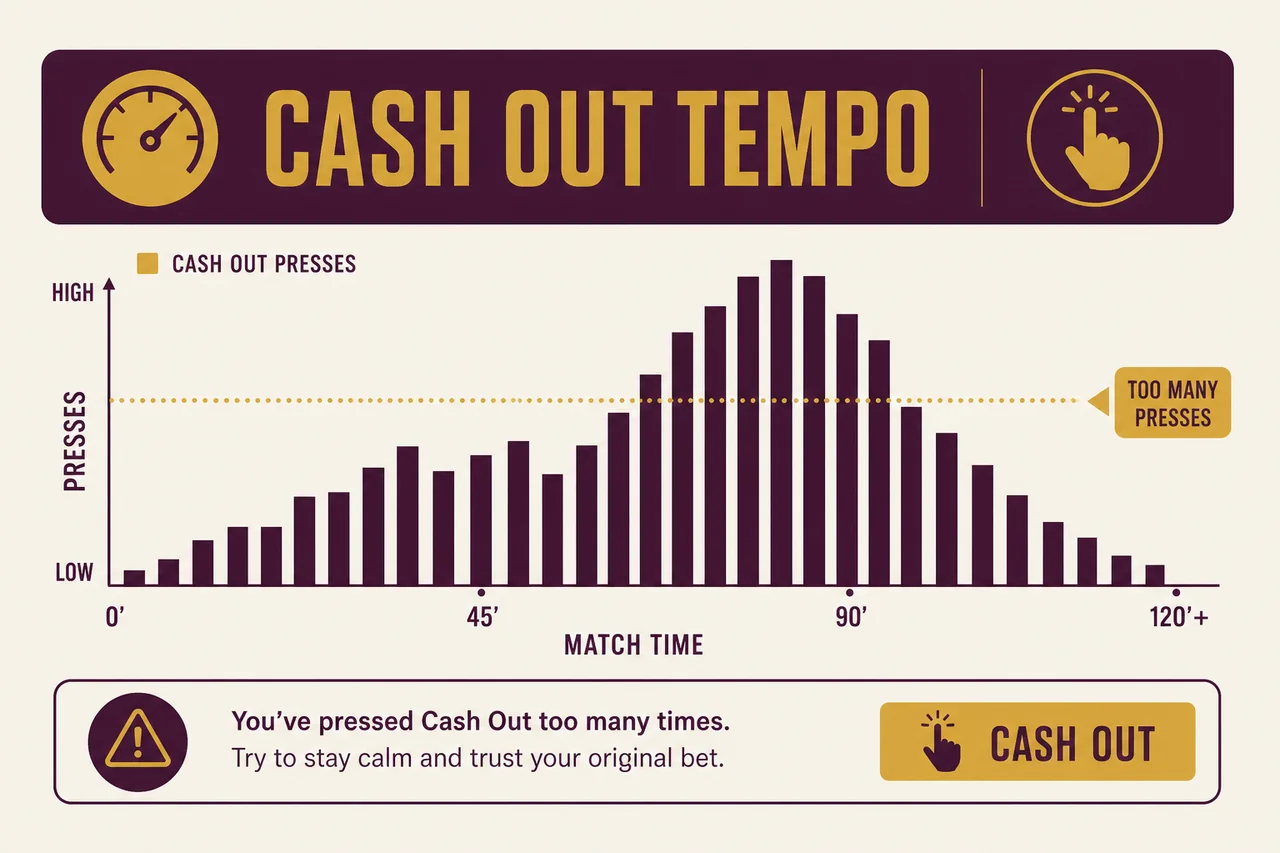
The small correction is simple. Decide before the first bet whether cash out is on the table at all. If it is, decide the trigger: a specific scoreline, a specific minute, a specific price range. If the trigger does not fire, let the slip run.
Trusting a Social-Media Tipster
Social-media tipsters publish winning picks and quietly delete losing ones. The visible track record is a highlight reel, not a ledger, and following the picks without a verified history is a well-documented route to a flat loss over a season. The International Betting Integrity Association runs an education programme in part because the information asymmetry around picks remains an open attack surface for players.
Tip. If a tipster will not share the full record including losers, treat the account as entertainment, not analysis.
Hiding the Monthly Total From Yourself
The month-end total is the single number that tells the honest story. Not the best win, not the worst loss, not the highlight ticket. The sum of deposits, withdrawals, time spent and promotions accepted, read once a month, is what either confirms the hobby is working or shows that the limits need lowering.
A Serbian guide such as burazbet.com can shortcut the operator comparison, but no guide replaces the player’s own monthly ledger. Treat the ledger as the mirror the hobby carries with it.
A Short Checklist Against the Common Slips
Walk this list once per month and most of the common mistakes above lose their teeth before they bite.
- Deposit limit set and not raised inside a losing week
- Reality check timer confirmed in the account settings
- Promotions accepted this month, with terms read in full
- Account history exported and totals summed
- Watchlist of sports and leagues reviewed and trimmed
- Tipster accounts followed, with their losing picks visible
None of these habits requires more skill than reading a slip. All of them keep the Serbian weekend what it was meant to be, which is a priced entertainment product in the hands of the player rather than the other way around.